Coverage: 2025-12-09 → 2025-12-16

We keep an eye on new AI papers on arXiv, pick one or two that really matter each day, and share the key ideas — no hype, just clear explanations.
Here’s what caught our eye over the past few days, unpacked by our AI-obsessed trio: Alex, your plain-language tech journalist host; Marc, the hands-on power user who’s built this stuff into real workflows; and Jamie, the senior AI/ML engineer making sure the models, integrations, and infra actually hold up in production.
LLM Daily – Memory in the Age of AI Agents
Excerpt: Memory has emerged, and will continue to remain, a core capability of foundation model-based agents. As research on agent memory rapidly expands and attracts unprecedented attention, the field has also become…
Why should I read it? This survey provides a comprehensive overview of agent memory, crucial for integrating LLMs into banking systems. It offers practical insights on memory types, functions, and emerging frameworks, which can enhance agentic workflows and improve long-context handling in financial applications.


LLM Daily – Information-Consistent Language Model Recommendations through Group Relative Pol
Excerpt: Large Language Models (LLMs) are increasingly deployed in business-critical domains such as finance, education, healthcare, and customer support, where users expect consistent and reliable recommendations. Yet LLMs…
Why should I read it? This paper offers practical insights into ensuring consistency in LLM outputs, crucial for banking applications where trust and compliance are paramount. The proposed GRPO framework could enhance the reliability of LLMs in critical financial contexts, addressing variability risks effectively.
LLM Daily – Forgetful but Faithful: A Cognitive Memory Architecture and Benchmark for Privac
Excerpt: As generative agents become increasingly sophisticated and deployed in long-term interactive scenarios, their memory management capabilities emerge as a critical bottleneck for both performance and privacy. Current…
Why should I read it? This paper provides practical frameworks for memory management in generative agents, addressing privacy and performance—key concerns for banking systems. The proposed forgetting policies and evaluation benchmarks can guide safe and efficient LLM integration in sensitive environments.


LLM Daily – AutoTool: Dynamic Tool Selection and Integration for Agentic Reasoning
Excerpt: Agentic reinforcement learning has advanced large language models (LLMs) to reason through long chain-of-thought trajectories while interleaving external tool use. Existing approaches assume a fixed inventory of tools,…
Why should I read it? This paper presents AutoTool, which enhances LLMs with dynamic tool selection, crucial for adapting to evolving banking environments. Its practical insights on agentic workflows and tool integration can significantly improve LLM performance in complex banking tasks.


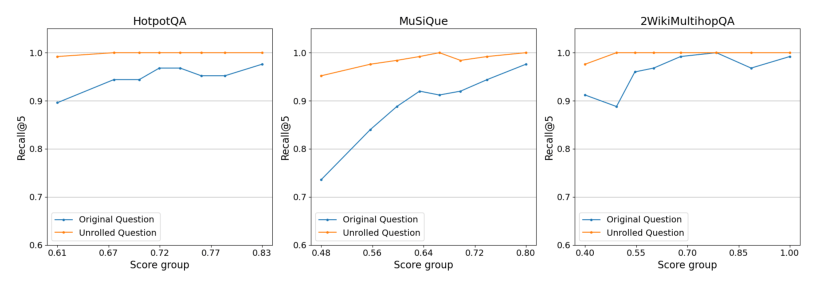
LLM Daily – Cooperative Retrieval-Augmented Generation for Question Answering: Mutual Inform
Excerpt: Since large language models (LLMs) have a tendency to generate factually inaccurate output, retrieval-augmented generation (RAG) has gained significant attention as a key means to mitigate this downside of harnessing…
Why should I read it? This paper presents CoopRAG, a novel RAG framework that enhances question answering by improving retrieval accuracy and reducing hallucinations, directly addressing LLM safety and performance concerns relevant to banking systems.




LLM Daily – Titans: Learning to Memorize at Test Time
Excerpt: Over more than a decade there has been an extensive research effort on how to effectively utilize recurrent models and attention. While recurrent models aim to compress the data into a fixed-size memory (called hidden…
Why should I read it? This paper introduces a novel memory architecture that enhances LLMs' ability to handle long contexts, which is crucial for banking applications requiring extensive historical data. Understanding these advancements can help in integrating more effective LLM solutions into banking systems.


LLM Daily – It's All Connected: A Journey Through Test-Time Memorization, Attentional Bias,
Excerpt: Designing efficient and effective architectural backbones has been in the core of research efforts to enhance the capability of foundation models. Inspired by the human cognitive phenomenon of attentional bias-the…
Why should I read it? This paper explores novel architectures and memory mechanisms that could enhance LLM integration in banking systems, particularly for long-context tasks. Understanding these frameworks may provide practical insights into improving model performance and safety in financial applications.


LLM Daily – NormCode: A Semi-Formal Language for Context-Isolated AI Planning
Excerpt: Multistep workflows that chain large language model (LLM) calls suffer from context pollution: as information accumulates across steps, models hallucinate, confuse intermediate outputs, and lose track of task…
Why should I read it? NormCode offers a structured approach to prevent context pollution in LLM workflows, enhancing reliability and auditability—crucial for banking systems. Its focus on explicit data isolation and transparency aligns with the need for secure, traceable AI decision-making in high-stakes environments.
LLM Daily – Asynchronous Reasoning: Training-Free Interactive Thinking LLMs
Excerpt: Many state-of-the-art LLMs are trained to think before giving their answer. Reasoning can greatly improve language model capabilities and safety, but it also makes them less interactive: given a new input, a model must…
Why should I read it? This paper presents a method for asynchronous reasoning in LLMs, enhancing interactivity and responsiveness, which is crucial for banking applications like real-time customer support. The techniques discussed can improve user experience and operational efficiency in LLM-based systems.


LLM Daily – An End-to-end Planning Framework with Agentic LLMs and PDDL
Excerpt: We present an end-to-end framework for planning supported by verifiers. An orchestrator receives a human specification written in natural language and converts it into a PDDL (Planning Domain Definition Language) model,…
Why should I read it? This paper presents a novel end-to-end planning framework using LLMs, which can enhance agentic workflows in banking systems. Its focus on dynamic orchestration and ambiguity resolution is particularly relevant for automating complex banking processes while ensuring correctness and interpretability.


LLM Daily – Architectures for Building Agentic AI
Excerpt: This chapter argues that the reliability of agentic and generative AI is chiefly an architectural property. We define agentic systems as goal-directed, tool-using decision makers operating in closed loops, and show how…
Why should I read it? This chapter provides essential architectural guidance for building reliable agentic AI systems, focusing on componentization, safety, and governance. Its insights into tool usage, memory management, and control loops are directly applicable to integrating LLMs in banking systems, enhancing both functionality and security.


LLM Daily – Systematization of Knowledge: Security and Safety in the Model Context Protocol
Excerpt: The Model Context Protocol (MCP) has emerged as the de facto standard for connecting Large Language Models (LLMs) to external data and tools, effectively functioning as the "USB-C for Agentic AI." While this decoupling…
Why should I read it? This paper provides a comprehensive analysis of security and safety risks in the Model Context Protocol, crucial for bank engineers integrating LLMs. It offers practical insights into vulnerabilities and defenses, directly addressing your priorities in LLM safety and agentic workflows.


LLM Daily – A Practical Guide for Designing, Developing, and Deploying Production-Grade Agen
Excerpt: Agentic AI marks a major shift in how autonomous systems reason, plan, and execute multi-step tasks. Unlike traditional single model prompting, agentic workflows integrate multiple specialized agents with different…
Why should I read it? This paper provides a comprehensive guide on designing and deploying agentic AI workflows, which is crucial for integrating LLMs into banking systems. It covers practical methods, best practices, and safety considerations, directly aligning with your focus on LLM integration and safety.


Laisser un commentaireAnnuler la réponse.